Walk right into any well-run facility and you'll find the peaceful scaffolding of an emergency control organisation resting behind everyday operations. On regular days, it is unnoticeable. When alarms sound, those duties become the distinction in between a tidy emptying and a chaotic scramble. Emergency wardens, deputy wardens, and primary wardens do not just comply with a list. They make judgments in changing conditions, they interact under pressure, and they work with individuals who are frightened, persistent, or merely puzzled. Training is just how you turn great purposes right into constant performance.
This overview distills the sensible core of warden training, including the across the country recognised PUA devices many organisations rely upon: PUAER005 Run as Part of an Emergency Control Organisation and PUAER006 Lead an Emergency Control Organisation. If you manage a center, lead safety and security, or are stepping into a warden duty for the first time, you'll locate the criteria, routines, and edge instances that form genuine response.
What an emergency warden actually does
Titles differ by jurisdiction and market, yet the backbone is comparable. Wardens check their locations, initiate and assistance discharges or shelter-in-place, help vulnerable passengers, and feed trustworthy information to the chief warden. They don't fight fires unless classed, educated, and risk-free to do so with initial assault equipment, and even then, life security comes first. In multi-tenant buildings or sprawling universities, wardens additionally end up being navigators, adapting international strategies to regional floor quirks.
An usual mistaken belief is that fire wardens just manage fires. In technique, the emergency warden's remit spans clinical occasions, bomb threats, dangerous chemical releases, loss of power influencing critical systems, aggressive burglar cases, and serious weather. The very best fire warden training builds transferable abilities: situational analysis, risk-based decision making, disciplined interaction, and management under stress.
The training backbone: PUAER005 and PUAER006
Australia's PUA Public Safety and security Training Plan supplies a structured method to warden proficiency that many organisations take on or mirror. PUAER005 Operate as Part of an Emergency situation Control Organisation focuses on wardens' functional capabilities: checking out the environment, applying procedures, managing occupants, and reporting up the chain. PUAER006 Lead an Emergency Control Organisation is the chief warden stream, where sychronisation, method, and multi-agency interfacing pertained to the fore.
If you are scoping a fire warden course or chief warden course, search for carriers that explicitly line up to these units. Carriers frequently detail them as PUAER005 program or PUAER006 program, in some cases mixing the older code PUAER with PUA units in marketing. The material ought to cover the significance of "operate" and "lead," not just state policy. You desire scenario-driven practice, not a slideshow of regulations.
Roles, hats, and fast recognition
Warden identification looks quaint until you are in a smoke-filled corridor and the sprinklers have actually decreased presence to a haze. Clear function identification assists passengers decide whom to adhere to. Several workplaces utilize coloured safety helmets or hats, vests, and lanyards. There is variant, but the conventions are extensively understood:
- Red for fire wardens or area wardens, consisting of flooring wardens. White for the chief warden or chief emergency warden, often with a black stripe for the deputy chief. Yellow or orange for interactions or emergency treatment duties, depending upon the site.
If your group asks what colour helmet a chief warden uses, address just: white. That chief warden hat colour helps marshal authority at a glimpse. Whatever your system, make it consistent across all occupancies if you share a structure. Laminated purse cards that reveal the colour code and radio channels conserve time in blended environments.
Baseline capacity for every single warden
Competent wardens aren't superheroes. They are regimented generalists with a few hard abilities. A solid warden course should build these capabilities and verify them with functional assessment.

Wardens learn to check their locations in minutes, not meander. They look for individuals needing support, doors that open up the upside-down, and choke points most likely to obstruct. They learn to make use of extinguishers just where experienced and secure to do so, but equally as significantly, when to shut a door and proceed. They don't end up being firemans in a weekend break. They come to be definitive guides who maintain people approaching life safety.
Radio discipline matters. Short transmissions, rational order, and no freelancing on channels. The chief warden requires clean inputs that permit them to make a plan, not 3 variations of the same report. Excellent emergency warden training constructs this behavior with stress drills. The very first time you practice radio brevity need to not be throughout an actual discharge with fire staffs en route.
Chief warden leadership, in practice
The chief warden duty is much less regarding individual heroics and more regarding synthesis. PUAER006, frequently called the chief warden training, concentrates heavily on these ability:
- Establish the Emergency Control Organisation quickly. Assign wardens to spaces, confirm communications, and established an event clock. Eight minutes feels like infinity throughout an emergency alarm. Use it well. Triage information. Separate confirmed monitorings from conjecture. Notes on a whiteboard or a simple electronic log keep a shared photo visible. Choose the best approach. For a tiny electric fire in a contained room, a local discharge could be adequate. With a smoke movement or chemical release, you pivot to a sector-based or full structure evacuation. Serious climate might ask for shelter-in-place. The best principal wardens stand up to autopilot. Interface with responders. Fire staffs will take command on arrival, however your short issues. Layout, plant shutoffs, individuals unaccounted for, location of the last recognized danger, and any handicapped or mobility-impaired residents who need rescue aid are gold. Coordinate the return to typical. Presented re-entry, create confirmation, and debrief capture. It is alluring to "green light" as well quickly, particularly under manufacturing pressure. Resist it.
On paper, these are simple. In real cases, you will make compromises under time stress. The chief fire warden who has actually practiced those choices will certainly act with clearness when secs matter.
Fire warden demands in the workplace
Numbers depend upon the dimension and intricacy of your site. Little single-storey offices might run well with a chief warden, a deputy, and one warden per 20 to 50 residents. Multi-storey or intricate facilities require one warden per location or area, with replacements for redundancy. Change work and leave rosters indicate you need much more names than a cool org graph recommends. I suggest a 1.5 multiplier on head count to cover lacks. If 6 wardens are necessary theoretically, train nine.
Training tempo is another fire warden position in emergencies demand usually downplayed. Induction is not enough. Arrange refresher emergency warden training a minimum of annually, with circumstance variation. Tabletop workouts can maintain muscular tissue memory between full emptyings. Turn scenarios: cooking area fire, gas leakage, clinical emergency situation obstructing a stair, obstructed egress because of repair. Individuals remember what they do, not what they listen to once in a classroom.
Fire warden training needs and the law-adjacent reality
Jurisdictions set baseline responsibilities, typically referencing standards like AS 3745 or its local counterparts. Those standards explain the emergency plan, the emergency control organisation, and the training rhythm. They seldom explain your messy mezzanine storage cage, the forklift charger corner, or the narrow staircase everyone fails to remember when they panic. Bring the standard to life by walking the site with your wardens quarterly.
A normal certified fire warden training program includes threat recognition, alarm kinds and significance, evacuation routes, setting up areas, use fire extinguishers, and interaction methods. Add the site-specific content that tends to be overlooked: after-hours access, key safes, impaired refuge points, door safety bypasses, and any plant that must be shut down by hand. If you operate labs or workshops, include the specific chemical or procedure risks and the way ventilation systems connect with smoke control.
Evacuation, from drill to reality
Evacuation is deceptively straightforward on a layout. Individuals do not act like arrowheads. They collect personal belongings, they look for close friends, they take images. Some freeze, some argue, and some sprint. The job is to transform that human tangle right into flow.
One of one of the most reliable drills I ran as a chief warden included a planted blockage generally stair. The front-of-house team did what several groups do: they attempted to https://beausgzs398.huicopper.com/fire-warden-course-assessment-practical-abilities-and-understanding-tests compel the acquainted path. The floor warden, educated to anticipate the unanticipated, rerouted web traffic to the secondary stair and briefed those at the back to maintain a stable pace. We shed perhaps 30 seconds in general, but a lot more importantly, we proved the second egress held capability under load.
For multi-storey buildings, do not flooding the stairs. Phase the launch by floors to avoid bottlenecks. Show wardens to move laterally first, then approach the staircase, inspecting that fire doors lock behind them. Smoke spread commonly traces with the doors individuals wedge open for convenience. You desire the behavior of shutting behind you so instilled that it holds under stress.
Persons calling for assistance
Every office includes individuals that require help throughout discharge, completely or temporarily. Crutches, late pregnancy, stress and anxiety conditions, post-surgery restrictions, and language barriers all issue. Your warden training program should consist of a straightforward, considerate way to identify needs and pre-assign buddies. Haven points with two-way interaction allow a controlled handover to fire crews when stairways are not workable.
Be mindful with emptying chairs. They are useful, however only when wardens are trained and confident. Exercise on the actual staircases you will certainly make use of, with a heavy mannequin or willing volunteer, under regulated problems. In a real occurrence, you don't desire the first descent to reveal an awkward touchdown geometry you didn't anticipate.
Using initial strike firefighting equipment
The line is bright: life security over home each time. Extinguishers and fire coverings purchase time and avoid tiny fires from growing, but they are not a responsibility and they should never be made use of to chase reducing returns. If trained, measure making use of PASS: pull, goal, press, move. Keep a clear egress path at your back. Stop if your digestive tract says the fire is larger than a wastebasket or you can really feel warmth pressing you back. I have actually seen well-intentioned personnel lose difficult seconds to a stubborn electrical fire that never ever need to have been challenged.
Include tactical detail in your fire warden training. Not all extinguishers are equal. CO2 for electrical fires, foam or dry chemical for combustible fluids, water hazes for regular combustibles, and a company "no" on water for invigorated devices. Mark up your website strategy with the type and area of each extinguisher and include it in the warden pack.
Communication that cuts through
Wardens reside on two channels: the radio net for command and the human channel for residents. On the radio, less is much more. Usage telephone call indications, give area first, then problem, after that demand. Example: "Degree 3 West - noticeable smoke in print space - evacuating southern stair - 2 flexibility assists." Your chief warden currently recognizes where, what, and that needs aid. Residents don't require that degree of information. They need calm, direct phrases: "Leave possessions, follow me, make use of the south stairway, hold the hand rails." Repeat. The cadence comes to be a metronome that relaxes people and keeps them moving.
One behavior worth boring is the closed-loop verification. If the chief warden assigns a job, the warden repeats it back. "Duplicate, move Level 2 east wing, report clear." It seems militaristic in a peaceful meeting room. In a noisy hallway, it avoids 2 wardens from replicating job while no person checks the web server room.
The chief warden's occurrence rhythm
When the alarm trips, the chief warden's mental clock starts. A straightforward rhythm offers well:
- Verify the signal and identify the initial action. Single-zone activation in a known problem location may call for examination. Several areas or noticeable smoke causes evacuation. Establish communications and assign protection. Confirm that each flooring or zone has an active warden. Fill up gaps with offered staff or deputies. Stabilize the circulation. Direct wardens to control stairways, reroute from clogs, and stay clear of cross-traffic. Interface with external -responders. Give a crisp short on arrival, then shift to sustain setting, managing residents at the assembly location and keeping accountability. Close out attentively. Only come back when licensed, record what worked and what really did not, and capture follow-ups with proprietors and due dates.
That rhythm straightens very closely with the assessment criteria in PUAER006 lead an emergency situation control organisation, but it also fits the unpleasant, iterative truth of real-time incidents.
Selecting a warden course that in fact develops competence
Course pamphlets usually look the exact same. When you review a fire warden course or chief fire warden course, ask for specifics. How much time is useful? Do participants make use of radios? Do they run through numerous situations, consisting of non-fire emergencies? Will certainly the assessment verify that participants can operate as component of an emergency control organisation under time pressure, or does it just test recall?
The finest emergency warden course providers visit your site and customise. They readjust material for your structure systems, from smoke control areas to access control overrides. They include bomb hazard and questionable bundle methods for workplace towers, and chemical spill treatments for labs. They rehearse climate shelter strategies for regions with severe tornados. They reveal you where your strategies are brittle.
Drills that matter, not drills for show
Treat drills as a financial investment, not a conformity tax. Rotate the day and time so you get to all changes. Tell tenants ahead of time that you will have onlookers. Area those observers at decision points: staircase entries, squeeze factors, assembly location rollout. Time from alarm to very first motion, to stair interaction, to assembly responsibility. If your structure has numerous stairways, procedure load circulation. The numbers tell you where your strategy leaks.
After the drill, take fifteen mins for a stand-up debrief with wardens. Ask what they saw and what they dealt with. Catch three actions, not twenty. Assign proprietors. Follow up prior to the next drill. The loop from observation to activity is the difference in between performative safety and security and functional resilience.
Integrating clinical response and security
Fire is natural. Many actual disruptions are medical or security relevant. Wardens require to understand how their function intersects with first aid and safety. In a cardiac arrest, the chief warden may coordinate group control and lift priority for paramedics while the emergency treatment team runs the resuscitation. In an aggressive trespasser situation, the approach moves to "run away if safe, hide if getaway is not possible, and as a last resource, interfere with." That rests alongside, not within, conventional fire emptying. Your plan needs to explain who calls the technique and how messages travel without triggering harm.
Security systems can help or impede. Doors that skip to secured on power loss can trap individuals otherwise configured with egress priorities. Train wardens on manual overrides and include security in drills. I have actually seen a best evacuation stumble when the gates declined to release after a partial power failing, triggering backflow at the main departure. One wrench on the mechanical release would have fixed it, yet only protection understood where the wrench lived.
Documentation people in fact use
Wardens will not scan a 90-page plan throughout an emergency. Provide succinct work cards and a pocket map. Laminated A5 cards work well: on one side, the function checklist, and on the various other, the map with egress courses, extinguisher kinds, refuge points, and assembly locations. For chief wardens, add a log sheet layout. Simple devices endure stress.
Keep your documents living. When maintenance relocates a departure indication or building closes a passage, upgrade the map and brief wardens. Link updates to the permit-to-work process so changes feed right into the emergency situation strategy, not shock it.
Competency maintenance: beyond ticking the box
Formal recertification cycles vary, yet proficiency discolors without use. Two short refresher courses a year, among them sensible, keep the side. Mix in micro-drills: a five-minute radio phone call examination on a Wednesday early morning, a fast sweep method for a brand-new warden, a walk-through of the cellar fire pump space with the maintenance group. These treats of practice build up. If a warden moves roles or floorings, re-train them for the new context. A skilled warden in a new design is a beginner with confidence, which can be risky.
Culture: why individuals adhere to wardens
Systems issue, but individuals comply with human beings. Wardens who project calm, that understand names, and who move with function pull others along. I collaborated with a flooring warden who habitually strolled the lengthy means around at 4 p.m. every day, chatting with the lab techs and the reception team. During an emptying months later on, those very same individuals trusted her instructions without disagreement. Experience made authority really feel reputable. You make that lengthy before the alarm.
Common risks and exactly how to prevent them
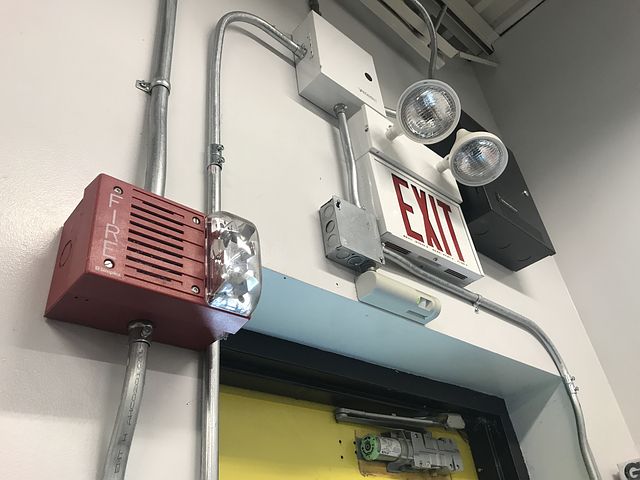
Most failures I see fall into a few patterns. Overreliance on a solitary stairway or departure, bypassing the detour even when the strategy states or else. Short-handed warden teams, especially on late or very early changes. Radios that run out fee or programmed inconsistently. Assembly areas selected for convenience rather than security, such as straight across from the main entry where responders need to phase. And the timeless, doors wedged open, silently undoing smoke control design. A quarterly walk with an unconvinced eye captures these. Build the habit.
Where PUAER005 and PUAER006 suit the bigger picture
The PUAER005 operate as part of an emergency control organisation system produces a standard for wardens who will certainly perform the plan. The PUAER006 lead an emergency situation control organisation unit raises chief wardens to intend, work with, and adjust. Combined, they offer a language and structure your team can share. That common framework is important when team step in between websites or when a multi-tenant structure runs a joint drill.
Look for training carriers that show the spirit of those systems, not simply the letter. Capability displays in the unintended minutes: a lift stuck between floors throughout emptying, a moms and dad who wishes to come back for a forgotten bag, a smoke detector throughout a thunderstorm that covers up sirens. Those are the sides where training earns its keep.
A small warden start-up checklist
- Confirm your warden group head count covers shifts, leave, and unique events. Issue identification, radios, and work cards. Examination radios weekly. Walk every path and staircase. Close doors, examine locks, and map choke points. Run one drill with a planned blockage. Procedure time and flow. Debrief, fix three things, and schedule the following practice.
The last metre
Emergency action resides in information measured in metres and secs. The last metre to the staircase landing, the last person checked in the restroom, the last seconds invested explaining the route as opposed to pointing and relocating. Wardens who educate to that range deliver calm in the noisy center of a real incident. Whether you use the red warden vest or the white chief warden hat, buy training that respects the reality of your site, talks clearly, and techniques up until good behaviors are automatic.
If you are building your program, slow to PUAER005 for wardens and PUAER006 for primary wardens, pair it with site-specific drills, and build a culture where security isn't a poster yet a practiced craft. The day you require it, individuals will certainly follow you since you have led them there many times in the past, with care, clarity, and a strategy that works when the strategy fulfills the fire alarm.
Take your leadership in workplace safety to the next level with the nationally recognised PUAFER006 Chief Warden Training. Designed for Chief and Deputy Fire Wardens, this face-to-face 3-hour course teaches critical skills: coordinating evacuations, leading a warden team, making decisions under pressure, and liaising with emergency services. Course cost is generally AUD $130 per person for public sessions. Held in multiple locations including Brisbane CBD (Queen Street), North Hobart, Adelaide, and more across Queensland such as Gold Coast, Sunshine Coast, Toowoomba, Cairns, Ipswich, Logan, Chermside, etc.
If you’ve been appointed as a Chief or Deputy Fire Warden at your workplace, the PUAFER006 – Chief Warden Training is designed to give you the confidence and skills to take charge when it matters most. This nationally accredited course goes beyond the basics of emergency response, teaching you how to coordinate evacuations, lead and direct your warden team, make quick decisions under pressure, and effectively communicate with emergency services. Delivered face-to-face in just 3 hours, the training is practical, engaging, and focused on real-world workplace scenarios. You’ll walk away knowing exactly what to do when an emergency unfolds—and you’ll receive your certificate the same day you complete the course. With training available across Australia—including Brisbane CBD (Queen Street), North Hobart, Adelaide, Gold Coast, Sunshine Coast, Toowoomba, Cairns, Ipswich, Logan, Chermside and more—it’s easy to find a location near you. At just $130 per person, this course is an affordable way to make sure your workplace is compliant with safety requirements while also giving you peace of mind that you can step up and lead when it counts.